
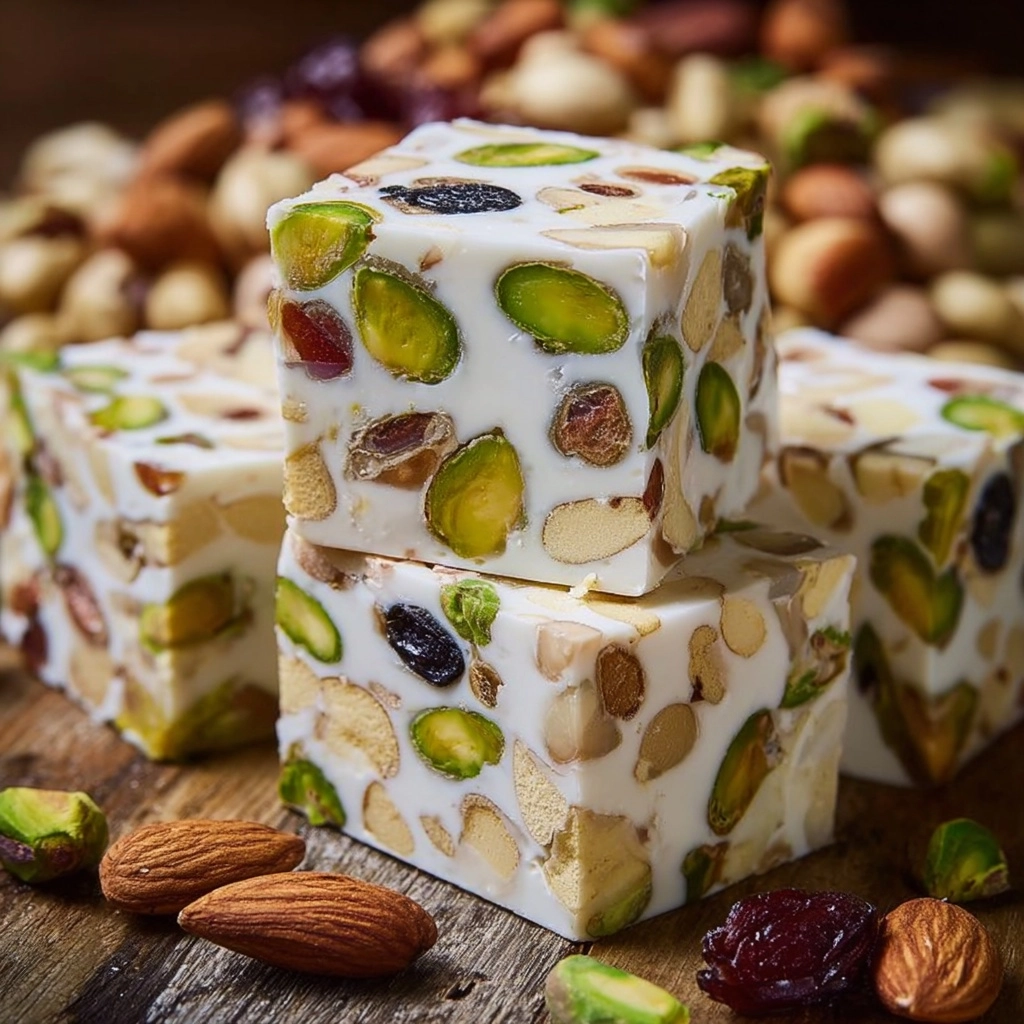
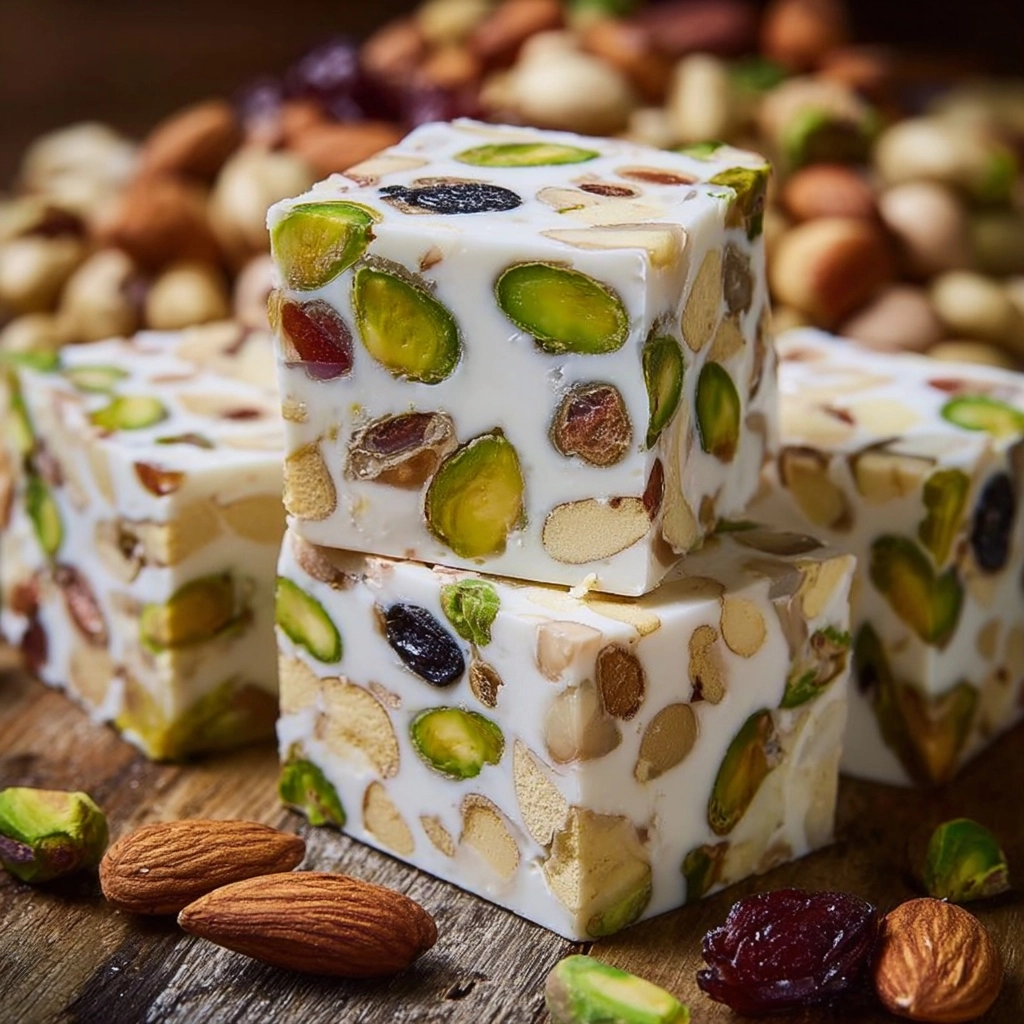
There is something utterly magical about the Nougat de Montélimar, a classic French white nougat bursting with toasted almonds and pistachios, sweetened with fragrant honey and finished with vanilla’s delicate touch. This confection is a celebration in every bite—soft but chewy, chewy but tender, and perfectly balanced between floral sweetness and nutty richness. Making Nougat de Montélimar at home feels like holding a treasure from Provence in your hands, and I can’t wait to share how you can create this stunning treat yourself!

Ingredients You’ll Need
The beauty of this recipe lies in its simplicity and quality ingredients—each one playing a key role in crafting the authentic flavor, texture, and appearance of Nougat de Montélimar. From the toasted nuts that add crunch to the honey that imparts natural sweetness and aroma, every element is essential to make this confection shine.
- 300 g blanched almonds, lightly toasted: Provides the signature crunch and nutty depth that nougat is known for.
- 100 g pistachios, lightly toasted: Adds vibrant color and a buttery contrast to the almonds.
- 250 g honey (lavender honey preferred): The fragrant sweetness anchors the nougat’s rich flavor and chewy texture.
- 200 g granulated sugar: Balances the honey and helps achieve the perfect firmness when cooked to the right temperature.
- 60 ml water: Used to dissolve the sugar, ensuring smooth syrup consistency.
- 2 large egg whites, room temperature: Whipped to soft peaks, they lighten the mixture creating the nougat’s fluffy, chewy texture.
- 1 tsp vanilla extract or seeds from ½ vanilla bean: Infuses a warm, aromatic note that complements the honey and nuts beautifully.
- Rice paper (edible wafer paper) for lining: Keeps the nougat from sticking to the pan and adds authenticity to this classic recipe.
How to Make Nougat de Montélimar
Step 1: Prepare the Pan and Nuts
Start by lining a rectangular pan with rice paper, both at the bottom and the sides, to ensure your nougat won’t stick. Then toast your almonds and pistachios at 160°C (320°F) for about 10 minutes until golden and fragrant. This roasting step transforms plain nuts into flavor powerhouses that will define the nougat’s nutty character.
Step 2: Heat the Honey
Slowly warm the honey in a heavy saucepan to 130°C (265°F). Be patient here because honey’s fragrance starts to bloom as it heats, and this step softens the texture, helping the nougat hold together beautifully.
Step 3: Make the Sugar Syrup
In a separate pan, combine the sugar and water, then cook without stirring until the mixture reaches 145–150°C (293–302°F), known as the hard-ball stage. This precise temperature ensures your nougat has the right chewiness—not too soft, not too hard.
Step 4: Whip the Egg Whites
While your syrups are working their magic, beat the egg whites at room temperature until they just reach soft peaks. These whipped whites are the secret to giving Nougat de Montélimar that lovely airy yet firm texture that melts in your mouth.
Step 5: Combine Everything Delicately
This is the moment where technique matters: slowly pour the hot honey into the beaten egg whites while continuously whisking, then gradually add in the hot sugar syrup, still mixing without pause. Keep beating for 5 to 8 minutes until the mixture becomes thick, glossy, and incredibly stiff—this is your nougat base coming to life.
Step 6: Add Vanilla and Nuts
Stir in your vanilla for that extra aromatic flourish, then fold in the warm toasted almonds and pistachios with a sturdy spatula, gently but thoroughly so every bite is packed with nuts.
Step 7: Shape the Nougat
Transfer the nougat mixture into your prepared pan and smooth the surface with an oiled spatula for a polished, even finish. Then cover the top with another sheet of rice paper to lock in moisture and keep it from sticking.
Step 8: Let It Set
Allow the nougat to rest at room temperature for 12 to 24 hours—patience here will reward you with perfect texture. Avoid refrigeration, as it can affect the consistency. Once set, carefully cut with an oiled sharp knife into the classic rectangular bars that Nougat de Montélimar is famous for.
How to Serve Nougat de Montélimar
Garnishes
While this nougat shines on its own, a few thoughtful garnishes can elevate your presentation. Sprinkles of edible flower petals or a light dusting of crushed pistachio dust add visual appeal and a slight texture contrast without overpowering the authentic flavors.
Side Dishes
Nougat de Montélimar pairs wonderfully with a delicate cup of herbal tea—lavender or chamomile complement the honey’s floral notes excellently. It also works beautifully alongside slices of aged cheese for a sophisticated sweet-and-savory moment.
Creative Ways to Present
Think beyond simple bars—cut nougat into bite-sized cubes for elegant dessert platters or layer thin slices between homemade ice cream sandwiches for a divine treat. Wrapping small squares in parchment or colorful wax paper also makes charming party favors or gifts that capture the spirit of Provence.
Make Ahead and Storage
Storing Leftovers
Once cut, store your Nougat de Montélimar in an airtight container wrapped in parchment paper to absorb any moisture. Kept at room temperature, it stays fresh and chewy for 2 to 3 weeks, perfect for enjoying a little treat anytime you please.
Freezing
While nougat’s texture might change slightly when frozen, you can freeze tightly wrapped pieces to extend their shelf life. Thaw thoroughly at room temperature before serving for the best experience.
Reheating
Reheating is not necessary for Nougat de Montélimar and is generally discouraged, as it can soften the nougat excessively and alter the texture. Best enjoyed fresh or at room temperature to savor its full flavor and chew.
FAQs
What makes Nougat de Montélimar different from other nougats?
Nougat de Montélimar is distinguished by its use of high-quality honey, especially lavender honey when possible, combined with toasted almonds and pistachios, and the traditional use of rice paper. Its texture is soft yet chewy, and the flavors are naturally sweet and aromatic without artificial additives.
Can I substitute the nuts in this recipe?
While almonds and pistachios are traditional and contribute key flavors and textures, you can experiment with other nuts like hazelnuts or walnuts. Just keep in mind that each nut has a unique texture and flavor that will influence the final taste of the nougat.
Do I need a candy thermometer for this recipe?
Yes, a candy thermometer is highly recommended because reaching the precise temperatures for honey and sugar syrup is crucial for achieving the perfect nougat texture. Without it, the nougat may turn out too soft or too hard.
Is Nougat de Montélimar safe to eat for people allergic to eggs?
Since this nougat recipe relies on whipped egg whites to build its texture, it is not safe for those with egg allergies. There are egg-free nougat variants, but they require different techniques and ingredients.
How long can Nougat de Montélimar be stored?
Stored properly in an airtight container away from heat and humidity, Nougat de Montélimar will keep well for 2 to 3 weeks at room temperature without losing its chewy charm.
Final Thoughts
Making Nougat de Montélimar at home is like crafting a little piece of French heritage with your own hands. The process might require a bit of attention and some patience, but the reward is a stunningly delicious nougat that’s rich in flavor, full of texture, and simply impossible to resist. I hope this recipe inspires you to bring a slice of Provence into your kitchen and share it with friends and family—it’s truly that special.
Your email address will not be published. Required fields are marked *